
Told It's Just Aging? Questions to Ask About Stem Cell Therapy
Leaking, dryness, or pelvic pain deserves curiosity, not a shrug. Plus clear questions for regenerative care.
By Bree AllredPT, DPT, PRPC · Aylara Pelvic Health
When "that's just getting older" isn't the whole answer
So many women tell me the same thing. They mentioned leaking, dryness, fatigue, or pelvic pain, and they were told it's simply part of getting older. Then they were offered two paths: manage the symptom or consider surgery. Many leave wondering whether something underneath could be looked at more directly.
That question is why I sat down with Dr. Ryan Peterson, a surgeon who now focuses on cellular regeneration. We talked about what stem cells are, where they come from, and what research is exploring, carefully and without promises. This issue isn't about a treatment. It's about honoring the signal your body is sending, and walking into any conversation with better questions.
— Bree
A symptom is a message, not a verdict
Dr. Peterson describes stem cells as master cells that act mainly as carriers, delivering chemical signals that influence how other cells behave. He points out that the body already knows how to repair itself. A child scrapes an elbow and bounces back fast. In his view, those signaling processes begin to slow as we age, particularly after about 35.
That doesn't mean a symptom should simply be accepted. It means your body may be communicating something worth exploring. Regenerative medicine is one area people are curious about, and Dr. Peterson is clear that he cannot and will not claim stem cells cure or treat any condition. Responses vary, and much of the research ends with the same honest note: more study is needed. The most useful first step is usually understanding your own body.
What your body may be communicating
Here is a gentle way to sort what you may be noticing. This isn't a diagnosis, just a starting map.
EXPECTED CHANGE
Healing can feel slower over time
Dr. Peterson describes the body's repair signaling slowing with age. Noticing that you recover differently than you used to can be a normal observation, and it can still be worth paying attention to.
WORTH A CONVERSATION
Symptoms you've been told to live with
Leaking, vaginal dryness, pain with daily activities, or ongoing pelvic pain are worth discussing with a qualified clinician who will take a full history, even if you've been told they're just part of aging.
REMEMBER
Stem cells and PRP are not the same
PRP uses your own blood, spun to concentrate platelets. Dr. Peterson cautions that calling PRP a stem cell treatment is misleading. Any regenerative option is one part of a plan, not a replacement for movement, nutrition, hormone care, or pelvic floor therapy.
TRY THIS ONCE A DAY THIS WEEK
Write down what your body is saying
This is a noticing practice, not an exercise. It can help you walk into any appointment with clearer words.
- 1Pause and notice one body signal today, such as leaking, dryness, pain, or fatigue. Simply name it.
- 2Jot down when it showed up and what you were doing, without judging it or trying to fix it.
- 3Write one question you'd like to ask a clinician about it, even if it feels small.
By the end of the week, you'll have a short record of your own experience. That record is valuable, and it belongs to you.
Stem Cell and Regenerative Health in a Woman’s World
Bree Allred with Ryan Peterson
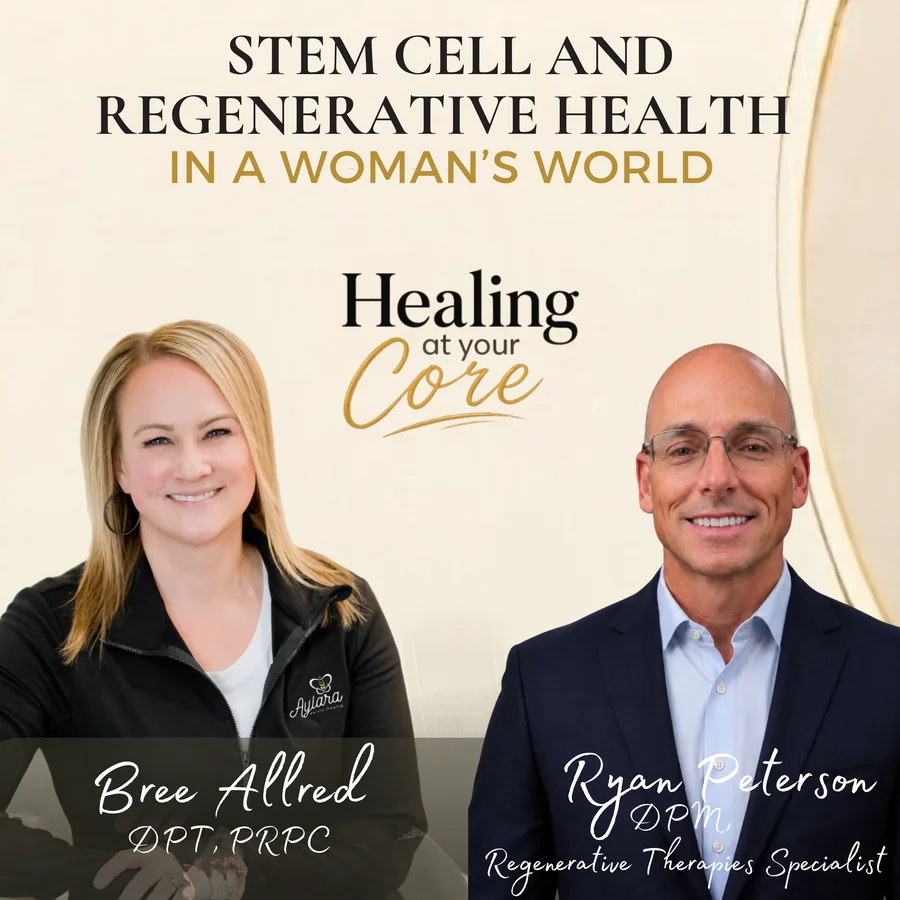
If you're curious about regenerative care, Dr. Peterson suggests looking past marketing to primary sources like NIH and Mayo Clinic material. When you talk with any provider, these are reasonable questions to ask about stem cell therapy: Where exactly are your cells sourced? Is third-party testing performed? Are you offering stem cells or PRP? He shares that the cells in his clinic come only from donated umbilical cord tissue after live birth, with donor screening and third-party testing. Clear answers to questions like these can help you make informed choices.
- Your symptoms deserve curiosity Being told something is "just aging" doesn't have to end the conversation. A full evaluation can help you understand what's happening.
- Ask precise questions Sourcing, testing, and whether a provider offers stem cells or PRP all matter. The distinction is real.
- The science is still developing Research is exploring regenerative approaches in women's health, but outcomes vary and more study is needed. It's one piece, not the whole plan.
What symptom have you quietly accepted because someone told you it was normal?
Sit with that for a moment. You don't need to have an answer or a plan yet. Naming it is already a step toward being heard, and you are far from the only one carrying it.
Start with answers about your own body
If leaking, pelvic pain, or symptoms you've been told to accept are part of your story, our pelvic health team can take a full history and talk through what may be contributing. You deserve a conversation that looks at the whole picture.
Request an appointment