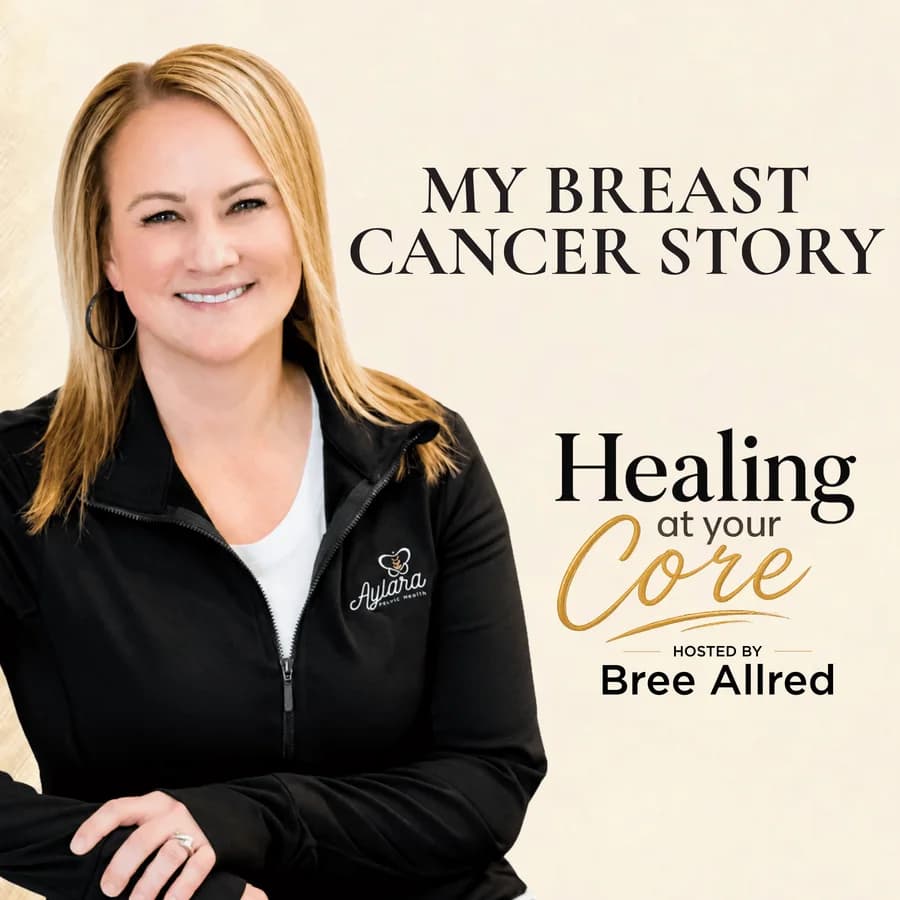
We here at Healing at Your Core and at Aylara Pelvic [00:00:30] Health are very passionate about women's health, and we feel that it would be a [00:00:35] disservice if we didn't spend some time talking about breast cancer. It's something that's near and dear to our [00:00:40] hearts here, as I am personally a breast cancer survivor.
It's been almost 15 years since my [00:00:45] diagnosis, and, um, something that I really want to [00:00:50] discuss and share a little bit of my experience, and also encourage others [00:00:55] to listen to your body, to listen to what you know, and to follow those [00:01:00] instincts when things just don't quite seem right. So [00:01:05] starting my journey, um, it was [00:01:10] September of 2011, and I was [00:01:15] a new mom to one-year-old twins, almost one-year-old [00:01:20] twins, boy and a girl, and we had prayed vivaciously for these little [00:01:25] babies.
We struggled with some infertility and had to take [00:01:30] Clomid in order to get pregnant, and ended up being one of the [00:01:35] 3% increase that get twins when we're on Clomid. And it was such a [00:01:40] crazy and hectic time. My kiddos never did do great with [00:01:45] breastfeeding, so I ended up pumping, uh, breast milk for them. Um, I [00:01:50] remember that I got a clogged milk duct, and this clogged milk duct, [00:01:55] um, was a pretty significant one, but I was finally able to get it to clear.
And [00:02:00] once I got the clogged milk duct to clear, there was a lump in my breast that I never really [00:02:05] did get to go away. But I was just watching it and monitoring it. Um, [00:02:10] as I'd been pumping, I was massaging my breast tissue quite a bit in [00:02:15] order to, um, help express more milk, so I was pretty familiar with what my breast [00:02:20] felt like at this time, and I knew that this lump was new.
But being that [00:02:25] my twins were almost a year and I was going to be working on weaning down the amounts of milk that I [00:02:30] was, was providing, um, I decided to just wait. So I waited [00:02:35] and right in October, kind of middle of October, we, we weaned, and then I [00:02:40] waited a month after we had weaned in order to kind of assess things.
[00:02:45] So come to like end of November, I believe, I was [00:02:50] like, "Okay, this lump is still here, and it hasn't changed size," and so I went to [00:02:55] my OB's office to get it checked out. And I went in for the exam. They [00:03:00] did a breast exam and found the lump and knew what I was talking about. For me, [00:03:05] um, it sounded silly, but it was almost like a marble that I could chase underneath my skin.
[00:03:10] Um, kind of like you move your kneecap back and forth, like it would kind of wiggle and move, um, [00:03:15] and it felt like about a marble size, like a standard marble. That's about what mine felt like. [00:03:20] And, uh, they sent me for an ultrasound, and I got the [00:03:25] ultrasound done, and I remember the ultrasound tech, um, giving me some guidance to [00:03:30] where it's like, "Okay, it has smooth edges.
Um, it's looking pretty good." Cancer tends [00:03:35] to have more jagged edges. But they did say that there was-- that they would send these back, [00:03:40] um, to the physician and, um We actually-- [00:03:45] trying to think. They had me follow up with a general surgeon, so I did the ultrasound, and then they scheduled an [00:03:50] appointment with a general surgeon for me.
And the general surgeon looked at the results, and he's like: "Well, the edges here are [00:03:55] pretty smooth. It looks like it's pretty localized and encapsulated." Um, edges on [00:04:00] cancerous tissue tend to be a little bit more jagged, and it was encouraging. He's like: "It's probably a [00:04:05] fibroadenoma, especially given, um, that those are common after breastfeeding and [00:04:10] in kind of pregnant postpartum women."
And he was like: "But there looks like there's [00:04:15] some solid nature to this tissue, and so we probably ought to get it biopsied." So I [00:04:20] remember going in for a biopsy on December 16th, [00:04:25] and the biopsy was generally painless. [00:04:30] Um, I'm pretty sure they took three hollow cores, so meaning that they've got a needle [00:04:35] that has a hole in the middle, and they just puncture it through.
And they did mine under ultrasound. I don't know if that's [00:04:40] standard for people, um, but they did mine under ultrasound so to make sure that they got the needle [00:04:45] through the mass that they were looking at. And they took three hollow cores, meaning they [00:04:50] cored out, um, three different spots in that and sent it off for, [00:04:55] uh, the pathologist to take a look at.
And I remembered [00:05:00] not really thinking much. It was a little bit sore afterwards, but I remember not really thinking much about it. [00:05:05] And then come Monday, around five PM, the general surgeon [00:05:10] called, and, um, I was still with patients in my physical therapy [00:05:15] practice and wasn't able to answer the phone call, but he said that, um, [00:05:20] he wanted to chat with me, and he would be calling around nine o'clock the next morning [00:05:25] and to see if I could be available.
And I was like, "All right." Uh, I knew then that that [00:05:30] meant that my biopsy results were likely back. And typically, when [00:05:35] the surgeon themselves is calling, uh, I just had an inkling that it probably [00:05:40] wasn't good. But I remember, um, then we had a Christmas party [00:05:45] that night with some friends, and I kept trying to look up my results online on the [00:05:50] online EMR results.
And they wouldn't load and wouldn't load, and so [00:05:55] finally we went home. We put our twins to bed, um, and then I went and was able to [00:06:00] get on the computer, and finally those results loaded. And I will tell you, I've never had the [00:06:05] experience quite like reading, um, ductal, ductal carcinoma [00:06:10] on a report that had my name at the top.
And ductal [00:06:15] means that it is in the milk ducts of the breast, and carcinoma means cancer. That's [00:06:20] the medical term for cancer. And I was like-- My husband looked at me, and he's like, "What?" And I'm like, "I have [00:06:25] cancer." And I remember just kind of feeling numb a little bit there and [00:06:30] kind of processing those results and then going into a state [00:06:35] where, um- I was just like, "Oh my gosh," like, "I have cancer."[00:06:40]
And so one of my twins ended up crying, and it was I think my son, Tayson, and [00:06:45] he ... I went in and just was rocking him and crying and, and, you know, [00:06:50] so many thoughts going through my head, like, "Am I gonna be here to see these beautiful babies grow up? Am [00:06:55] I ... Are they gonna know life without a mom?" The way our thoughts do, that it just kept [00:07:00] kind of going a little bit to worst-case scenario.
And that [00:07:05] experience for me was just crazy. Um Then I tend to [00:07:10] like to get more information, so I went through every ounce of the biopsy report and was [00:07:15] finding, doing okay, like it's breast cancer. It's-- There's some that's just [00:07:20] like cells that are looking a little bit crazy, and there are some that are pretty [00:07:25] differentiated, meaning they look nothing like breast cancer or like breast tissue.
Um, so [00:07:30] there's some that are pretty wild, and there's some that were doing, just kinda hanging out and maybe starting the [00:07:35] process. And I had a high grade, which means that it was quickly developing [00:07:40] and quickly dividing. And then just realizing like, okay, [00:07:45] this is like where we're at. I knew all the details about my cancer.
[00:07:50] Um, that original biopsy didn't really show any [00:07:55] estrogen or progesterone feeding this, um, so we were just kind of [00:08:00] prepping, and we called and kinda let family know and let 'em know that we would, um, have a little bit more [00:08:05] information for them later after I met with the surgeon. So I went to work the next day [00:08:10] and kept my phone with me and visited with the doctor and [00:08:15] ended up meeting with him.
I had canceled some patients at the end of my day so that I could go and [00:08:20] meet with him later that day, and he was so gracious and kind and went through all of the options with me. [00:08:25] Um, looking at surgeries and maybe wanting some more biopsies [00:08:30] and maybe wanting to look into things a little bit further.
Um, [00:08:35] he told me that they could get me scheduled for surgery. They also really wanted to do an MRI [00:08:40] on me, uh, where I was so young, and I had dense breast tissue. I also got a [00:08:45] follow-up mammogram. I'm trying to remember the process of all of it, but one thing the surgeon told me is he [00:08:50] really took me through, like, "Okay, here's the options.
Um, we're likely going to be doing chemo. We'll [00:08:55] look at radiation and surgery," and then determining what type of surgery we wanted to do, [00:09:00] whether that was a mastectomy or a lumpectomy, and also that would have some determinants [00:09:05] on what treatments we would want to do. He also wanted to get, um, a biopsy of a [00:09:10] lymph node just to see if there was, uh, any chances that this had spread.[00:09:15]
So we kinda went through this process, and one of the things that he told me, he says, "Breanne, the [00:09:20] research that we have really shows that you've got six weeks without this [00:09:25] changing survivability." And that was huge for me because it gave me some comfort and time and knowing that it's [00:09:30] like, whew, I've got some time to do some research, to make some decisions, and to move [00:09:35] forward with what we choose.
Although there was a sense of urgency in me that I'm like, "Something's trying to [00:09:40] kill me, and I want to get it out." So there were things there. Um, this [00:09:45] diagnosis happened on December nineteenth. So I found out on the nineteenth. [00:09:50] I talked to the physician on the twentieth, and of course, we're going into Christmas, so knowing that I had [00:09:55] that six weeks without it changing survivability in my case was hugely beneficial [00:10:00] for me.
Um, we went through Christmas, we told family, we [00:10:05] did kind of all the things there, and it definitely, you [00:10:10] know, kind of puts a damper on things and it, you're like, "Okay, here we go. We've got [00:10:15] this." And I remember in this time a family member of mine, um [00:10:20] He gave me a different perspective, and I absolutely loved his perspective.[00:10:25]
Um, 'cause sometimes we're stuck in the like, "Why me? Why, [00:10:30] why did this happen to me?" And he gave me the perspective of like, [00:10:35] "Of course, why not you? You have incredible family support. You have [00:10:40] young... You're young and healthy and you can fight this. You have two beautiful babies." It's like, "Why [00:10:45] not you?" And, and that was a unique perspective that he gave me, and I will forever be grateful for [00:10:50] that from, um, my uncle.
So I [00:10:55] remember kinda doing some more research, um, being connected with some other breast [00:11:00] cancer survivors that have been diagnosed young. I was 28 years old at the time, [00:11:05] and, um, kind of out of my element. Everybody was... I'm like, typically [00:11:10] women are older when they get breast cancer. And so being 28 and [00:11:15] in kind of some unique situations there, it was nice to talk to some others who had been in my [00:11:20] situation.
After Christmas, we were really waiting for a certain point in my menstrual cycle because breast [00:11:25] tissue changes with the menstrual cycle. So I had to wait until I was at a certain point in my menstrual cycle to get [00:11:30] my MRI. And I remember getting that at the beginning of January, and just a few [00:11:35] days later, I was able to get in with the Huntsman Cancer Institute.
The Huntsman Cancer [00:11:40] Institute was phenomenal. Um, I highly recommend it for anyone who- that's going through [00:11:45] cancer treatments. But that doesn't mean that you have to not, uh, go to your local providers as well, 'cause they are [00:11:50] getting more and more research, more and more protocols. Um, the doctors that are dealing with cancers are [00:11:55] very interconnected, and they have things called tumor boards where they can, if they're not [00:12:00] sure on something, that they can present your case at these tumor boards and discuss what's best for you.
So [00:12:05] it's really neat. Um, but based on what they found on the MRI, there was another questionable spot in my [00:12:10] same breast. Um, mine was the right side, and it was so small that they weren't sure [00:12:15] that they could get a biopsy on it, but it was questionable. And then there was some things showing up maybe in a m- [00:12:20] one of my lymph nodes being inflamed, so they wanted to do a biopsy on the lymph node to guide [00:12:25] treatment just a little bit more.
Turned out the lymph node came back clean, so it was determined that we would [00:12:30] kind of move forward with surgery first and then doing chemo following surgery. [00:12:35] I... At that time then, it was the decision of do I do a [00:12:40] lumpectomy or a mastectomy? And I had very small breasts at the time, [00:12:45] and I'd just finished, you know, pumping for twins, and they were kind of deflated [00:12:50] and small.
And they were concerned about, with the extent of the size of my tumor, [00:12:55] with my breast, what a lumpectomy would look like. And then we had this other questionable spot. So I decided to [00:13:00] move forward with a mastectomy. And then the other decision there that I had to make was, do I do a [00:13:05] unilateral mastectomy or a bilateral mastectomy?
So a mastectomy is they take the entire breast. [00:13:10] Um- I chose at the time to do a unilateral mastectomy because I [00:13:15] believe, uh, because I really wanted to have more children and wanted to save [00:13:20] some, a breast to be able to breast them, feed them in the future. And so they were very [00:13:25] much in support of that. My left breast didn't have anything that we were concerned about at the time, and so I [00:13:30] moved forward at the end of January with a mastectomy on my right breast.[00:13:35]
Surgery was, um Challenging, [00:13:40] uh, exhausting. They have drains that they put in afterwards, and I'm going to [00:13:45] have somebody that's gonna talk about surgical options, but I'll give you a little bit, kind of my perspective. [00:13:50] Um, the drains were the worst part. So they put some drains, which has a little bulb at the [00:13:55] end connected to a tube, and they create some little bit of suction.
When we create an empty [00:14:00] space in the body, uh, the body tends to want to fill that space with something, and so it'll tend to [00:14:05] do it with fluid, and if we're not getting that fluid out and letting it accumulate, then it can breed [00:14:10] some infections. So they've got these tubes that, um, are stitched. [00:14:15] They come right out of your body, and they're stitched a little bit to the side to help them not move and, [00:14:20] uh, I had the tubes in for about two weeks.
Uh, I think after one week [00:14:25] I got one of them removed based on the amount that was coming out, and then I had to wait one more week to get the second one removed, [00:14:30] and it was quite the experience, and that was the most uncomfortable [00:14:35] part for me. I remember looking down after surgery. They were able to save my nipple.
They were able to test the [00:14:40] tissue underneath the nipple, and it was clear for cancer, and they'd gotten pretty [00:14:45] clean margins, and they didn't find any, so they were able to save my nipple. And I remember looking down and being [00:14:50] like, "My nipple is still here." Like, it still looked like me. It was a little deflated, but it [00:14:55] still looked like me.
And then they place what they call a tissue expander inside, and the tissue [00:15:00] expander is... The way I think of it is like the really old-school, um, [00:15:05] ice packs. Do you know- that have kind of the hard top and then they've got kind of a bag underneath? That was [00:15:10] similar to what was inside of me. And the hard tip, they would, um, poke [00:15:15] saline needles into, and they would fill up or pump up the expander [00:15:20] to allow for my breast to maintain the size that it needed to maintain for an implant [00:15:25] later on.
Now, there's many surgical options that people can undergo for, [00:15:30] um, reconstruction afterwards if they choose to, and I chose to [00:15:35] just do a silicone implant. I did not want to deal with healing from other parts of [00:15:40] my body, nor did I need to. I had really healthy tissue and, um, [00:15:45] didn't really need to worry about things there.
But sometimes they can take a flap from your [00:15:50] belly or from your back. Sometimes they'll pull muscle with it, depending on what your tissue quality is like, [00:15:55] and, um, I was lucky enough or chose, in my case, to [00:16:00] just do a silicone implant. So I had this tissue expander. Um, they gave my body about a month [00:16:05] to heal.
In this timeframe, another decision that I had to make is where [00:16:10] we wanted more children. Uh, we'd had fertility issues to begin with. The type of chemo [00:16:15] they were going to recommend for me was one that [00:16:20] would likely result in some infertility and damage eggs and do [00:16:25] things that way, so they would not be able to ensure that we could have kiddos, um, [00:16:30] future kiddos.
Um, so that was another decision that I had to make along with my [00:16:35] husband as we were talking and- they can go [00:16:40] through the first steps of, like, the IVF process to get to frozen embryos in order [00:16:45] to save some things for people. I, at that time, I was like, "Mentally, I'm not in a place [00:16:50] where I can put my body full of hormones."
So they wanted me to have surgery to get the cancer out, [00:16:55] and then in that month timeframe where my body's trying to heal, we would go through the IVF [00:17:00] process. We would have kind of one shot at it, um, to where they would [00:17:05] stimulate things with hormones to produce more eggs. We would fertilize those eggs with my husband's sperm into [00:17:10] embryos, and then freeze the embryos for future use.
That was something, after a lot of [00:17:15] consideration, that I chose not to do, and for me, it was a good choice. I was [00:17:20] just like, "I don't think I can put my body through that process in this healing [00:17:25] timeframe," nor did I think I could mentally handle it at the time, just because of everything that I was going [00:17:30] through.
Um, but they gave me one month in between surgery and starting chemo. [00:17:35] Um, about a week before chemo, I had another surgery to place what's called a Port-a-Cath, [00:17:40] and it went in right under my left collarbone, and they [00:17:45] thread it, it directly into a vein so that it gives them good access, um, [00:17:50] to be able to administer the chemo that's in a safe way.
And so [00:17:55] we did that, and then the week later, I started chemotherapy. So my [00:18:00] cocktail that they called it was called ACMT. [00:18:05] Um, it was Adriamycin, which is also known as the Red Devil, and I would get that independently on [00:18:10] its own, and then I would have Cytoxan and Taxol together. I believe [00:18:15] I had six treatments, and I had three of Adriamycin, and then I had three of, uh, [00:18:20] Cytoxan and Taxol.
And I don't wish chemo on my [00:18:25] worst enemy. It was the most awful thing I've ever done in my life. But you go [00:18:30] in, and I remember my first treatment, and they [00:18:35] kind of take some-- they take a blood draw, like a quick blood draw, in order to make [00:18:40] sure that you have good enough cells that they could do the treatment, that your body could withstand [00:18:45] the amount of damage that they were about to do.
'Cause if you, if your [00:18:50] blood cells and things haven't recovered well enough, they will delay the treatment by a week and [00:18:55] then try again. But there's... Your body has to be, have enough recovery [00:19:00] that it can handle another beating. And so they took a blood draw, get your base levels, and [00:19:05] then I went in, and they hooked me up to the Adriamycin, and it was like a six to [00:19:10] eight-hour drip that they put in.
And so they also give you a lot of [00:19:15] medicines to help with allergic reactions, with nausea, with different things there. And, uh, [00:19:20] I just remember it's like, okay, you came in, you watched a movie, you took a nap, I journaled, I would [00:19:25] blog, I would do different things. And it was an interesting [00:19:30] experience to kind of watch.
And then felt pretty decent other than tired [00:19:35] during the actual infusion. And then when I got home, it was about an [00:19:40] hour later that the nausea and the, like, absolute feeling so crappy hit me. [00:19:45] Um It was awful. I [00:19:50] was not sure I could keep anything down. I did throw up. Um, I was lucky [00:19:55] enough to have family and friends that would come and stay with me and help take care of our kiddos.
I [00:20:00] was still at a point where I had lifting restrictions. Um, and somewhere in this [00:20:05] timeframe, I would feel pretty crappy for about five to seven days. It was usually [00:20:10] about five days. Um, I would have chemo on a Wednesday. I would take Thursday, Friday off of work, [00:20:15] and then I would end up going back to a light day at work, kind of a modified day, a little light day at work on [00:20:20] Monday, and then I would continue through, uh, the week, and then I would go Monday, [00:20:25] Tuesday, and then again on Wednesday, I would have another chemo.
So my chemos were happening every other [00:20:30] week. And so I would have a decent week where I could eat and [00:20:35] sustain myself, and I would have a week of pretty much survival based on energy levels. [00:20:40] So at this point, this was my life. We would go back in. Uh, the next [00:20:45] day, they would give me a shot that would encourage my body now to produce more [00:20:50] blood cells, even though that we were, like, trying to kill them, and that shot would make me so [00:20:55] achy all over my body.
I remember, uh, knowing where [00:21:00] every single bone was in my body because each and every one of them ached. There were days that I would spend [00:21:05] almost all the time in the tub because it was the only place I could find some relief. I would be just in a [00:21:10] bathrobe and lay in bed for the first several days. It was, it was rough.
And [00:21:15] then GI upset. Um, if it wasn't nausea, it was definitely coming out the other [00:21:20] end, um, just like a fire in the rectum. It was awful. [00:21:25] Um, I do not wish chemo on my worst enemy. And then it comes down and I'm like... [00:21:30] I had kinda recovered that first time, and then the second treatment [00:21:35] that day, I got my second treatment, um, and it's day 14, your [00:21:40] hair will start to fall out with my r- with my, um, cocktail.
[00:21:45] So day 14, my hair started falling out. I remember showering, uh, the day after [00:21:50] chemo And, uh, just like tugging on your hair and the whole thing would come [00:21:55] out. I took a shower and it was like all just clogging up [00:22:00] the, the drain. Um, I tried to blow-dry my hair and it would just like... Hair [00:22:05] would just, like the amount of hair I cleaned up off the floor was crazy.
And I remember that night being like, [00:22:10] "Okay, I need to shave my head because I can't keep watching it fall out like [00:22:15] this." Um, so I- we had a head shaving party. We shaved my head that night. [00:22:20] And, um, several of my husband, like my husband and several of his friends [00:22:25] also shaved their heads with me. I had a dear friend that she ended up chopping her hair [00:22:30] and getting a pixie cut so that she...
That was her way of [00:22:35] supporting. She's like, "I always wanted to try one and you gave me a great excuse to kind of do that." And we grew our hair out [00:22:40] together when it came to that point. Um, but that was a hard day when I shaved [00:22:45] my head. And people showed up for me in amazing ways with food, [00:22:50] or would keep track of my chemo schedule and bring an Italian ice 'cause that would sit [00:22:55] well, or stop by with Rumbies or apples 'cause those were things that I could stomach.
[00:23:00] Um, it was one of those things where it was like, okay, people are amazing and our community showed up [00:23:05] and I have never felt so much love before in my life. So we went through this kind of every other [00:23:10] week feeling crappy. About halfway through we switched my treatments to the other rounds which my body [00:23:15] tolerated a lot better and would rebound better, so I was actually able [00:23:20] to try not getting the shot the day after, and that helped my system so [00:23:25] much.
I wasn't as achy. I could kind of function a little bit better. And then they make [00:23:30] you, after chemo, they make you wait about three months before you head to reconstruction. And [00:23:35] reconstruction has lots of considerations as well, where I was only... [00:23:40] And along this timeframe I was having follow-ups with my surgeon and I was-- we were talking about [00:23:45] expansion into the breast tissue with that expander that they would see, okay, how [00:23:50] big do we need to go?
Um, do we overstretch just a little bit and then allow it to tighten [00:23:55] back down? So there were a lot of discussions happening there. I was really aiming to [00:24:00] just match my opposite breast at the time, and we went through that process [00:24:05] and I remember in, um, it was in August, I was able to have [00:24:10] my final reconstruction where we swapped out my tissue expander and they put the, [00:24:15] um, they put the silicone implant in and it was such a [00:24:20] great day for me and it went amazing.
And by that point forward, we went [00:24:25] forward and, and, you know, then you start living life as a survivor which is [00:24:30] unique in and of itself. Like there's a lot of mental games that take place. There's a lot [00:24:35] of, um- Whenever anything goes wrong, you have a headache that lasts longer than a day or [00:24:40] two, all of a sudden it's like, "Wait a minute, is there cancer?"
Um, anytime you get sick and you don't [00:24:45] rebound as quickly, "Wait a minute, is there cancer?" Like, it's always there in the back of your mind. The [00:24:50] further I've been out from my diagnosis, the better I've done, and, um, I only give [00:24:55] myself permission to worry when I go in for a yearly check still with my oncologist.
[00:25:00] And it's been a unique thing that's taught me so much. Um, I have so much more empathy. [00:25:05] I gained strength I didn't know I had, and things that don't kill us make us [00:25:10] stronger. They really do. And it was an incredible experience to go [00:25:15] through and one I hope I never have to do again. Right before I opened Aylara [00:25:20] I chose to have a prophylactic mastectomy on my other side.
So I was [00:25:25] about, uh, 12 years in to my [00:25:30] survivorship journey and was ready for, um, [00:25:35] a kind of swap on my, on my right breast, [00:25:40] and at this point I'd gained some weight. I actually-- So I was able to have two more babies. [00:25:45] Um, one thing I didn't mention is that I've, I've been lucky enough to go through menopause once [00:25:50] already and get to go through it again.
I'm pretty sure I'm in perimenopause right now, [00:25:55] and I am the lucky one that gets to go through menopause twice because chemo shut down all [00:26:00] function in my body, and I was in menopause for about a year and a half after [00:26:05] my chemo treatments. And then we were lucky enough and very blessed enough to be able to have [00:26:10] more children afterwards.
I did so very closely watched [00:26:15] by my oncologist, and we were making sure that my breast tissue wasn't [00:26:20] changing too much on my remaining breast, and we went through and I was able to breastfeed, um, both of [00:26:25] my subsequent babies. So we had two more babies and actually had no fertility issues, [00:26:30] interestingly enough.
I almost kinda felt like my body went through a reboot with the menopause and when things started [00:26:35] back up, um, and we didn't have any fertility issues afterwards and that was such a [00:26:40] blessing to us. I know that's not everyone's story, but it was our, our blessing and our story. [00:26:45] And, um, my remaining breast served its purpose for me and [00:26:50] I had decided that it was like, okay, I'd gained some weight.
I had one breast that changed with weight, one breast [00:26:55] that didn't. I had about a cup size difference between the two, and I decided I was ready to go in for a [00:27:00] symmetry surgery and decided that it was like, okay, if I'm gonna do something with my left breast, [00:27:05] that I wanted to actually get to where, um, my right breast and my left [00:27:10] breast were the same and that I was going to do a prophylactic mastectomy on the left [00:27:15] in order to just decrease any breast cancer risks that I had.
My left breast did come [00:27:20] back free of cancer, which it was incredible and it was so [00:27:25] interesting and so neat, um, to have that experience to be like, "Okay, I've taken care of my [00:27:30] belli- body. I've watched my health. I've changed my diet in order to [00:27:35] kind of help with cancer prevention of recurrence," and it made a huge difference for [00:27:40] me.
My second experience with the mastectomy is now more fresh. Again, it was [00:27:45] clear, um- which was really neat to hear and went [00:27:50] through, I did actually a reduction on my left breast and asymmetry surgery on [00:27:55] the right to then even it up. So we did some expansion again on my right [00:28:00] and a reduction on my left.
Had expanders in both again. I had to expand the right breast, [00:28:05] um, and just maintain space in the left one while we were evening things up and [00:28:10] allowing things to heal. And I will take you a little bit through, um, my healing [00:28:15] process, uh, later on in a different episode where we'll talk about what rehab can look [00:28:20] like and maybe show you some pictures of my journey along through this podcast if you're choosing [00:28:25] to watch on YouTube.
I am a breast cancer survivor. It no longer defines me, [00:28:30] although it is still a big portion of who I am from what it taught me and what I've learned. [00:28:35] And I hope that as you follow along, we're gonna talk through some episodes and maybe walk you [00:28:40] through a little bit of what people go through through a breast cancer experience, and [00:28:45] maybe helping someone as with a new diagnosis be able to make some decisions.
I [00:28:50] hope this episode of Healing At Your Core was informative, that you will enjoy this kind of [00:28:55] month-long series on breast cancer as we are in Breast Cancer Awareness Month. [00:29:00] And thanks for listening and also for following and we hope that you find this helpful
[00:29:05] [00:29:10] [00:29:15] [00:29:20] [00:29:25] [00:29:30]